 Our focus on cocktail piano chords has included some attention on open chord voicings. As a review, let’s consider one way we can open up a chord like a Major 7th. We’ll use Fmaj7 for our example. This chord, in its most basic form (root position) is spelled like this:
F A C E
1 3 5 7
This chord is considered to be in “closed” position since the chord tones are as close to each other as they can possibly be. In other words, there are no chord tones between the F and A, the A and C, or the C an E.
Well, we can open this chord by playing a 1-5-7-3 voicing, which looks like this:
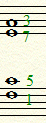 Play this chord voicing as it illustrated above and listen. Just the way it is here, we have one of the most popular cocktail piano chords played by the pros. You’ll notice that the chord has all four of the basic chord tones, so it is complete as it is. That said, let’s make it a little “fuller” by doubling the root and playing it in between the 3 and 7. We will leave the 1 and 5 “open”. Our result looks like this:
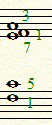 Play this new chord voicing as we have illustrated it and listen. Then compare the one preceding it by playing them both back and forth. It’s interesting how making one simple modification can change the texture of the voicing we are playing.
How could we use this? Well, to illustrate, we will use an excerpt from the very popular Pro Piano Chord Bytes (a 24 week online subscription that can change the way you think about playing chords). Let’s say that we are playing the beginning of Hoagy Carmichael’s and Mitchell Parish’s Stardust. If you look at the melody, you’ll notice that it is the 6th of the chord. Well, a very tasteful way of filling this up would be to use the Major 7th voicing that we just took a look at. The entire voicing may be played below that melody note.
Here is the excerpt from Pro Piano Chord Bytes that illustrates doing exactly that:

Play this chord voicing in the context of this melody and notice the richness that results!
You are highly encouraged to transpose this voicing into other keys. Doing so will have you feeling so much more confident when you’re looking to get a nice full sound on those major chords. Of course, you will gain more value by actually incorporating the voicing in favorite standard songs of yours!
Remember,
Always…
ALWAYS…
PLAY WITH PASSION!
Musically,
Dave
www.PianoAmore.net
www.ProProach.com
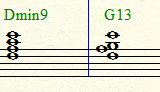
 Our journey with jazz piano chords continues as we take a look at upper structure triads. There are several of these and, here, will take a look at one.
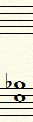 We mentioned that the b9 and 13 will be added. Although we can identify the b9 as the Db and the 13 as the A with some thought, playing this chord becomes “easy as pie” when we think in terms of a triad. Think “A major” and play it over that 3 and 7, which looks like this:

 When it comes to piano scales for improvisation, the pentatonic is one you will want to have fun with in all keys. Now, we already acknowledged the major pentatonic scale. Let’s look at it here, specifically the C pentatonic scale:
 When it comes to cocktail piano chords that you’ll use often, this one must be mentioned. It is one of the easiest to understand. That said, if your left hand is not used to playing 10th intervals, it may take a little getting used to. However, any effort put into this is well worth it.
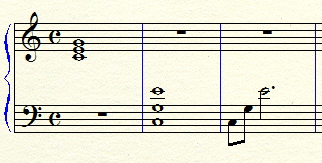 In the second measure above, you will see that we are playing the C and G of this chord one octave lower. The E is played where it was originally on the piano keyboard (it’s just written in bass clef to be consistent with the lower two chord tones and to put everything in the context of the left hand). So, you see, we have taken the middle note (in this case, the E) and moved it an octave higher. This is often referred to as “opening up the chord.” The distance now between the C and E is now a 10th interval instead of a 3rd interval.
 Time and time again, I have received emails from members of Piano Amore (www.PianoAmore.net) asking how someone at a beginner level can learn how to play cocktail piano from scratch, while having very little or no experience at all. I can’t tell you how much I appreciate those emails because when I read them, the enthusiasm of the person writing is always quite evident. So, if you’re one of those people who inquired, let me thank you because it’s people like you who inspire me to create ways of helping cocktail piano enthusiasts in any way I can.
 The drop 3 voicing is one of those piano chords that can be endlessly explored… and well worth the time and effort, too! Adding this concept to your cocktail piano playing will most surely add more interest to those standard songs.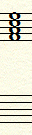
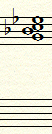 Okay, let’s turn this into a drop 3. Again, we will take that 3rd note from the top (in this case, the Bb) and move it one octave below:
 Again, compare the original structure with this drop 3 voicing. Learn to really appreciate the differences in sound achieved by even little variations like this. You’ve got a whole world of sound to explore!
 Of the many piano scales that you will want to familiarize yourself with is the Dorian mode. Let’s take a look at this special scale, which you will find yourself using frequently while improvising on piano.
 An exploration of cocktail piano chords really ought to include an eventual thorough understanding of chord inversions. Mastery of your inversions is most certainly conducive to increased confidence when it comes to adding some style to those favorite songs of yours.


 One of the most valuable piano improvisation tips one can learn to implement is that of overusing a concept to the point of it becoming part of one’s nature. Perhaps we can more easily understand this if we equate this to the language that we speak, since music is a language in itself. When we learned to say a certain word like, “Wow!” we found many places within our conversations to implement it to the point of it becoming natural to do.
 During our last lesson that focused on jazz piano chords, we took a look at a very popular way to voice that II-V chord progression among the pros. It’s interesting to note that this II-V chord progression is the most common chord progression in all of jazz and pop harmony. Well, let’s take a look at an extension of this progression…