12 Bar Blues Piano: The Mixolydian Scale

12-Bar-Blues-PianoAs a follow-up to our recent introduction to 12 bar blues piano, let’s take a look at another scale that you will want to be familiar with. We already mentioned one, which is the blues scale. The other scale that you will want to have a handle on when it comes to improvising over those dominant 7th chords is the Mixolydian scale.

Now, we acknowledged that when playing 12 bar blues piano that the key that you are in determines what blues scale you play. In other words, if you are playing the blues in the key of C, then the C blues scale will work well throughout the entire form. This means that the C blues scale will sound good over the C7, F7, and G7. That’s right. You don’t have to play the F blues scale for the F7 or the G blues scale for the G7. This is one of the interesting things about the blues scale. You see, each tone of the C blues scale has a different relationship with each of the other chords. For example, when you play the C, that tone is the 1 of the C7. However, when you play it over the the F7, it becomes the 5. Over the G7, it is the 4. Some of these relationships sound more consonant than others. Some sound dissonant. Since music really involves “tension and release,” this blues scale really serves us well! Explore the other tones of the C blues scale and see how they relate to each of these three chords. Of course, play and listen!

As mentioned above, another scale you will want to become confident playing is the Mixolydian scale. You’ll want to know this scale for each of the 7th chords you are playing, including the:

C Mixolydian scale C7

F Mixolydian scale for F7

G7 Mixolydian scale for G7

To arrive at any of these, simply play the major scale that corresponds to each root and then lower the 7th of the scale one half step. That gives you the Mixolydian scale for each of the 7th chords:

C7 = C  D  E  F  G  A  Bb  C

F7 = F  G  A  Bb  C  D  Eb  F

G7 = G  A  B  C  D  E  F  G

Using this scale in conjunction with that blues scale really adds lots of interest to your soloing. You are highly encouraged to explore your potential creating ideas using all four of these scales, and as you do so, remember…

Always…

ALWAYS…

PLAY WITH PASSION!

Musically,

Dave
www.PianoAmore.net
www.ProProach.com


12 Bar Blues Piano

12-Bar-Blues-PianoAs a cocktail piano player, you’ve just got to have a bit of a handle on playing some 12 bar blues piano. It’s a nice way to interrupt your routine with some tasteful variation. In addition, as you become more and more acquainted with playing blues piano, you’re sure to use some of that “bluesy” playing in your favorite standard songs, too.

Okay, let’s get started. If you’re going to play 12 bar blues piano, then you will, of course, want to get a handle on the basic form of the blues.

Here is the basic 12 bar blues form:

/  C7  /  C7  /  C7  /  C7  /

/  F7  /  F7  /  C7  /  C7  /

/  G7  /  F7  /  C7  /  C7  /

Above, we are illustrating the blues form in the key of C. However, you’ll want to get to know it in other keys as well. Okay, so let’s take a look at what we have there…

You’ll notice that we have three dominant 7th chords. They are:

C7, F7, and G7

This chord progression is commonly referred to as the I, IV, V progression since, based on the C Major scale, the C is the I, the F is the IV, and the G is the V. For other keys, use the same approach to coming up with the correct chords.

You’ll want to be able to play through the 12 bar blues at a nice slow tempo using some nice sounding blues piano chord voicings for these chords. Sure, you can use the basic form of these chords for now but you’ll soon want to know some great sounding voicings because, after a while, those straight 7th chords can sound a bit plain.

For now, go ahead and play through this chord progression with those chords using the left hand as you keep a nice slow, steady tempo. Once you are feeling comfortable doing this, let’s have some fun with that right hand as you start implementing the blues scale.

Now, an interesting thing about the blues scale is that, even though there is a corresponding blues scale for each root, when you are in the key of C, the C Blues scale works over the entire form.

Here is the C Blues scale:

C  Eb  F  Gb  G  Bb  C

Although you will feel compelled to play up and down that scale for a while, which you are encouraged to do, make it a point to stay musical with your ideas by using only bits and pieces of the blues scale and playing them in a rhythmical fashion. Start with just two notes, playing them back and forth. Then add another… then another… etc. Whatever you play, listen to your results and appreciate each step of the way.

Here is a nice application of some nice blues piano improvisation ideas and voicings by two jazz piano icons who have made their mark in the worlds of piano and jazz (They are playing the blues in the key of C… see if you can pick out those blues scale notes!):

As you have fun with the blues, remember…

Always…

ALWAYS…

PLAY WITH PASSION!

Musically,

Dave
www.PianoAmore.net
www.ProProach.com

Piano Improvisation Tips: Chord Tones & Scale Tones

Piano-Improvisation-TipsWhen it comes to playing cocktail piano, of the many piano improvisation tips I could offer, a favorite to promote that is most conducive to getting satisfying results is using chord tones. However, this approach can take on a more mature flair when your mind set is that of combining chord tones with thinking and playing in a linear fashion as well.

Let’s say that you are improvising over the chord changes to a standard song like Jerome Kern’s I’m Old Fashioned (lyrics by Johnny Mercer). The beginning in the key of F would look like this:

/  Fmaj7  Dmin7  /  Gmin7  C7  /

Here we have a I – VI – II – V chord progression. The chord tones for each of these chords are:

Fmaj7 = F  A  C  E

Dmin7 = D  F  A  C

Gmin7 = G  Bb  D  F

C7 = C  E  G  Bb

Consider using these chord tones in an arpeggiated fashion. Mix it up, changing the order from ascending to descending. In addition, start your improvised lines on a chord tone in the middle of the chord and work yourself outward, to the left… to the right… etc.

Perhaps you have already had some experience doing this. If so, you know the possibilities are unlimited, especially when you start using the inversions of these chords as well. One of the most important piano improvisation tips I ever learned was to not take this simple strategy for granted. Remember, it’s one thing to “know” a technique or strategy. It’s quite another to implement it.

In addition, take note that the four chords in this progression are diatonic chords in the key of F Major (Chord Progressions and How They Work #1 offers a good introduction to the diatonic system). This means that their chord tones are all members of the F Major scale. This being the case, the F Major scale serves as a good resource for improvising over these two measures. Play up and down the entire scale over this chord progression. If you play it in eighth notes, one time in either direction, you will fill up one measure. So, if you play in order (in eighth notes)…

F  G  A  Bb  C  D  E  F…

…you will have played through the scale over the chords Fmaj7 and Dmin7. Do this for the next measure as well. Now, while maintaining the duration of these chords, play half of the scale for half a measure and use only chord tones for the other half of one of the measures. Mix it up!

Naturally, you can begin the scale beginning on different tones. You will find that certain chords lend themselves to starting on different notes of the scale. There is a gold mine of discovery just within what was mentioned in that last sentence.

As you come up with your own ideas using this improvisation strategy, your confidence will soar since you will be the one creating. The sky’s the limit here, so have tons of fun with this! As you do so, remember…

Always…

ALWAYS…

PLAY WITH PASSION!

Musically,

Dave
www.PianoAmore.net
www.ProProach.com


Jazz Piano Chords: The Drop 2 Voicing

Jazz-Piano-ChordsYour investigation of jazz piano chords would be well served by gaining a familiarity of drop 2 voicings. It’s one effective way to take what you already know to more creative levels for sure.  As a cocktail piano player, you’ll absolutely learn to love this approach to voicing chords on the piano. Simply playing a couple of drop 2 voicings in succession results in your sounding like you know what you are doing at those keys.

So what are they? The concept is simple to grasp. Now, although this is true, the implementation of these jazz piano chords can be taken to many levels with regular practice of them in various musical contexts. Okay, we call them “drop 2” because: 1) The focus is on the second chord from the top of a given chord structure (second from the right on the piano keyboard) 2) That note is simply dropped to become the lowest member of the chord voicing. Let’s see how this looks when we apply it to a basic chord that you are already likely to be familiar with, the Major 7th chord…

Specifically, we have the Amaj7 chord here in its basic root position:

A  C#  E  G#

Play this chord formation with the right hand beginning with the A above middle C. Okay, next, see that E, which is the second chord tone from the top? Instead of playing it there, play it one octave lower with the left hand. Therefore, the order of our chord tones is as follows:

E  A  C#  G#

Play this chord voicing and listen!

Now, play the original Amaj7 above… then play this drop 2 voicing again. Go back and forth. It won’t take long for you to appreciate the difference!

When it comes to your adding more and more jazz piano chords to your “piano playing toolbox,” the drop 2 voicing approach will open all kinds of doors for you, as you can apply this to any chord structure!

Let’s do one more here before you go on your own to explore the endless possibilities:

Here is a Gmin7 chord in second inversion (yes, you can apply this to all the positions!):

D  F  G  Bb

Play this Gmin7 chord with the right hand beginning with the D just above middle C. Then drop the second chord tone from the top to the bottom, which gives you this:

G  D  F  Bb

You are playing the G with your left hand. Of course, you can split the voicing between the hands so that each is playing two chord tones if you like.

Apply the drop 2 voicing to all the inversions of a 7th chord as you ascend and descend and listen to what you get! As you take your cocktail piano playing to many different heights with this one, remember…

Always…

ALWAYS…

PLAY WITH PASSION!

Musically,

Dave
www.PianoAmore.net
www.ProProach.com

Jazz Piano Chords: Quartal Voicings

Jazz-Piano-ChordsSince we have been on the subject of jazz piano chords, one that you’ll want to add to your repertoire for sure will be shown here. It is one of many quartal voicings that are popular among jazz piano players. As a cocktail piano player, you’ll incorporate this into your playing quite a bit. What’s more, it’s an easy one to assimilate and start using right away.
This particular voicing can be used for Major 7th chords, Major 6th chords, and more. Right now, we’ll consider it for these major chord qualities. Let’s take a look at it as it applies to a Gmaj7 or G6 chord. For starters, let us look at the G Major scale here:

G  A  B  C  D  E  F#  G  A  B  etc…
1  2  3   4  5   6   7    8   9

As we know, a Gmaj7 chord is based on the 1, 3, 5, and 7 of this scale. A G6 chord is based on the 1, 3, 5, and 6 of the scale.

A quartal voicing is one that is built using perfect 4th intervals. Well, what we will be playing is a jazz piano chord voicing that fits this description and consists of only three notes.

This is one of those jazz piano chords that you’ll use again and again. Looking at the major scale above, take a look at the 3, 6, and 9. We will be playing them in this order, as follows:

B  E  A

You’ll note that this chord voicing does not contain the 7th. However, a jazz or cocktail piano player will often use this quartal voicing when a Major 7th chord is called for just the same. In addition to the perfect 4ths creating a nice contemporary sound, the 6 and 9 in the same voicing make for more interest.

As a cocktail pianist, you will find that playing the root of the chord (G in this case) in the bass area followed by the voicing in the register just below middle C will “complete” the chord nicely. Also, you may play the voicing first and then the root in the bass area. For example, you can play one for two beats and then the other for the next two beats when playing four beats to the measure.

As an accompanist, playing the root with the left hand and the voicing with the right hand will work well. With playful experimentation, you will become more and more comfortable using this jazz voicing in the context of your playing.

Jazz pianist McCoy Tyner made quartal voicings very popular, as he used them regularly! They are used extensively in modal playing but are certainly not limited to that.

Be sure to play this voicing in all the keys! It’s easy to do, since you only need to start with the 3rd of the corresponding major scale and build up in perfect fourths. You’ll learn to love this one as part of your “piano playing toolbox.”

Remember,

Always…

ALWAYS…

PLAY WITH PASSION!

Musically,

Dave
www.PianoAmore.net
www.ProProach.com

Jazz Piano Chords: Less Is More?

Jazz-Piano-ChordsWhen it comes to jazz piano chords, less really can mean more when it comes to sound and texture. You probably already realize that it doesn’t take a lot of notes to create some really interesting harmony. Actually, this is very true. Let’s consider one example of this concept in action below.

Let’s take a look at a Cmaj7 chord (of course, you are encouraged to apply this in all keys for maximum benefit and appreciation!). Here is a Cmaj7 chord in its basic form:

C  E  G  B

Naturally, this chord structure gives us a nice sound in its own right. But when it comes to playing jazz piano chords, players use these basic positions less often. Now, by making a couple of very easy adjustments, we can come up with a voicing that is much more contemporary sounding. So that this is easy to transpose in other keys easily, let’s acknowledge the chord tones in terms of degrees of the major scale:

C = 1

E = 3

G = 5

B = 7

Okay, now here is where the “less is more” comes into play. Rather than using all four of these chord tones for the piano chord voicing that we are going to be playing, we will use only three of them. Specifically, we will include the 1, 3, and 7 in our voicing. However, we will make a simple modification, as follows…

Instead of playing the chord with the C furthest to the left of the voicing (C, E, B), we will begin with the B furthest to the left. Use the B next to middle C. Then play the C and E to the right of it. So, our voicing looks like this:

B  C  E

We are playing a 7-1-3 chord voicing. This will make it easy when playing this structure in other keys.

Play this jazz piano voicing and listen!

You’ll notice a bit of dissonance when playing it. This is especially due to the half step that is created between the 7 and 1 of the voicing. Also, within this chord structure, there is a perfect 4th interval between the 7 and 3. This also lends itself to that more contemporary sound. It’s interesting that the major 3rd interval between the 1 and 3 sets it off a bit since it is a consonant interval. Seeing jazz piano chord voicings in this manner will lead to a better understanding of how different textures are created.

This Major 7th chord voicing is one you’ll want to add to your “piano playing toolbox” for sure. By doing so, you’ll be joining the likes of pianists like Bill Evans who was well noted for playing such contemporary chord voicings!

Remember,

Always…

ALWAYS…

PLAY WITH PASSION!

Musically,

Dave
www.PianoAmore.net
www.ProProach.com


Piano Chord Progressions: This One’s Easy And Fun

Piano-Chord-ProgressionsAs you have fun with different piano chord progressions, one that is easy and yet conducive to achieving some interesting sounds on those keys is shown here:
I-II-III-II-I

We are looking at the first three diatonic chords of a key. Let’s use the key of C Major for our purposes here. In this case, we will be playing:

Cmaj7 – Dmin7 – Emin7 – Dmin7 – Cmaj7

So, we are climbing up to that III chord and back down to the I chord in a stepwise fashion. Now, this is one of those piano chord progressions that you can have a lot of fun improvising with. Actually, if you’re sitting in the corner of a restaurant or club with the lights dim and want to compliment the ambience with something delicate and tasteful, you can really make this sound like something.

The chords in their basic root positions are:

Cmaj7 = C  E  G  B

Dmin7 = D  F A  C

Emin7 = E  G  B  D

However, let’s apply that 1-7-3-5 piano chord voicing to this progression. So, what we will be playing is as follows:

(The Root and 7 of each of these chords are played with the left hand and the 3 and 5 are played with the right hand. Begin with the C below middle C as the first root and simply climb up in steps)

C  B  – E  G  (Cmaj7)

D  C – F  A   (Dmin7)

E  D – E  G   (Emin7)

Begin by playing up and down as you play all the chord tones of each chord at the same time. Then play the 1 and 7 of each chord together while you play the corresponding 3 and 5 in a melodic fashion, playing each note separately. As you do this and become more and more comfortable with it, you’ll begin to see that you can really get a nice cocktail piano sound climbing up and down this progression.

Play through this progression delicately and, as you do so, create some simple improvised melodies with the 3 and 5 of each chord. You’ll become more creative with this. Also, consider playing everything up one octave. Then come back down to the original octave. Then play the voicings in a “rolled” fashion, playing from the bottom chord tone (Root) to the top (5th), too!

Naturally, this chord voicing structure works well in your tunes. However, just using it as you play through this progression really lends itself to complimenting a quiet setting. In addition, just by playing these three chords, you can explore your potential improvising with just these few notes. Experiment with your dynamics as well, using crescendos and decrescendos.

As you really set the scene with this simple yet great sounding combination of chords, remember…

Always…

ALWAYS…

PLAY WITH PASSION!

Musically,

Dave
www.PianoAmore.net
www.ProProach.com

Cocktail Piano Chords: Open Voicings

Cocktail-Piano-ChordsAs you explore your world of cocktail piano chords and voicings, you will undoubtedly find yourself investigating open voicings if you haven’t already. In this message, I would like to suggest a concept that is so very easy to get a handle on yet is very effective at the same time.

Consider applying this to any 7th chords you are already familiar with. Simply play any 7th chord in its most basic position. For now, let’s use G7:

G  B  D  F

Here we have a G dominant 7th chord in root position. With your left hand, you would most likely finger this chord with your pinky, middle finger, index finger, and thumb.

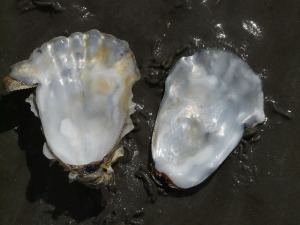
Well, perhaps you have often heard the expression “less is more.” A perfect example of this can be realized by doing the following: simply leave out the middle two chord tones and play only the G and F (the Root and 7 of the chord) aith your pinky and thumb. This is often referred to as a “shell.” If you think about an oyster, you can imagine the two shells with the oyster inside. You can think of that 3 and 5 (B and D) as the “oyster” or middle and the 1 and 7 as the outer shell.

Becoming familiar with playing your 7th chords in this fashion will open you up to many possibilities when it comes to cocktail piano chords. For one, playing just the shell voicing (the root and 7) works well on its own without adding anything else to it. Go ahead and do this. Play through a favorite song of yours using only the 1 and 7 of those 7th chords with your left hand and playing the melody with your right and listen to the very open sound that results. You’ll learn to love these shell voicings before long.

In addition, becoming acquainted with these shells and implementing them will lead to your being able to extend the idea to playing other piano chord voicings. One example would be playing the shell with the left hand and playing that 3 and 5 that you left out an octave higher. That’s a nice chord voicing that I’ve often referred to as the “oyster voicing” (it’s just a name I attached to it). So, if you are playing that G7, one way to approach it would be:

G and F with your left hand

B and D with your right hand

The D would be the highest chord tone. Now, if that happens to be your melody note, this works nicely. If your melody note is higher, then you could play this voicing under it, thus creating a 5-note voicing.

Focus on creating shells for a while and you’ll appreciate more and more the “thin” or “open” sound they create. Then you can expand on them, too. As you have fun with them, remember…

Always…

ALWAYS…

PLAY WITH PASSION!

Musically,

Dave
www.PianoAmore.net
www.ProProach.com

Jazz Chord Voicing: Minor 9ths

Piano-Chord-VoicingLet’s take a look at what can be referred to as a stock jazz chord voicing. We use the term “stock” since this is a voicing that virtually all jazz piano players will use. In other words, it’s “on the shelf” ready for use and it gets used often. This particular chord structure can be used for minor 7th chords.

First we will acknowledge a minor 7th chord in its basic root position. We’ll use Dmin7 for our example. Here it is:

D  F  A  C

Now if we associate this chord to a minor scale beginning on D that includes these chord tones, we have:

D  E  F  G  A  B  C  D  E  F  G  A  B  C  D
1   2  3  4   5  6   7  8

(8 is the same as 1)

For our purpose, we have the scale illustrated in two octaves above.

Let’s look at it again as we highlight the chord tones in the Dmin7 chord:

D  E  F  G  A  B  C  D  E  F  G  A  B  C  D
1   2  3  4   5  6   7  8

Specifically, the chord is constructed using the 1, 3, 5, and 7 of the scale.

Now, if we extend the numbers a bit, we notice that the second E can be called a 9:

D  E  F  G  A  B  C  D  E  F  G  A  B  C  D
1   2  3  4   5  6   7  8  9

So, in other words, the 2 and the 9 are really the same letter name.

Okay, now imagine a bass player playing that root of the chord (the D). This means that the pianist does not have to. Therefore, he or she has the freedom to use those fingers to play some more interesting colors. That remaining F  A  C  E can be played with the left hand while the bass player plays the D. Of course, you can play the root with the D an octave lower, taking on the role of the bass player, while playing the F  A  C  E with the right hand (the C is middle C so you know what range we are playing in).

Play this and listen! You are actually playing a jazz chord voicing for Dmin9. Yes, that’s right, more often than not, when your music calls for a Dmin7, you can play a Dmin9 instead, thus achieving more color! This is typical for a jazz pianist to do. Jazz players will add colors like 9ths to 7th chords without needing to be told to do so. That’s one of the great liberties a jazz player enjoys.

Now, go ahead and create more Minor 9th chords on other roots based on what we’ve learned here. As a cocktail piano player, you’ll learn to love these! While you have fun with those 9ths, remember…

Always…

ALWAYS…

PLAY WITH PASSION!

Musically,

Dave
www.PianoAmore.net
www.ProProach.com

Jazz Piano Chords: The Very Minimum

Jazz-Piano-ChordsIf you are just beginning to learn jazz piano chords and have a decent familiarization with 7th chords, it will likely serve you well to begin harmonizing some of those tunes you are familiar with in a fashion that is both easy and conducive to getting a decent sound out of those keys.

Here is one such way to begin your venture with jazz piano chords:

1) Identify the 3 and 7 of each of these chords

2) Harmonize the melody with just that 3 and 7 with your right hand while playing the root of the chord with your left hand

Let’s say, for example that you are harmonizing Richard Rogers’
My Romance (lyrics were written by Lorenz Hart) in the key of C. After the pickup notes, the melody note is a G and the chord in that first measure is a Cmaj7. Here is the basic construction of the chord:

C  E  G  B
1   3  5  7

The C is the root, so you can play this note in the bass area with your left hand.

Notice that the melody note is the G, which is the 5th of the chord. Below this melody note, play the 3 and 7 with your right hand as well. So, you are playing (in this order) B, E, and G,  the 7, 3, 5 respectively (we are not concerned with including that 5th unless we are playing a form of a diminished chord). By doing this, you are playing the minimum chord tones necessary to complete the functionality of the chord. However, what you are also achieving here is a nice thin sound. This is an excellent cocktail piano approach when playing those ballads, though it is certainly not limited to slow tunes.

Play through an entire tune using this strategy. Remember, the 3 and 7 of the chord are always included. Now, in many cases, that melody note will be either the 3 or the 7. This means that you can simply add the one missing below that melody note while playing that root with the left hand. An example would be the first measure of Jerome Kern’s All The Things You Are (lyrics by Oscar Hammerstein II) in the key of Ab. That first melody note in the first measure is an Ab and the chord is Fmin7. Notice that the Ab is the 3rd of the chord. Therefore, simply play the 7th (Eb) below that Ab while playing the root (F) with the left hand. This tune is excellent for this since you’ll see that there are many melody notes that will be harmonized in this manner.

By taking on this strategy, you are not only obtaining a good sound that works, but you are also confirming your understanding of the important notes of these chords. Thus, you are setting up a nice foundation to make more of these chords later, since you can add extensions, like 9ths, 11ths, 13ths, etc.

Do this with several tunes in your repertoire and you’ll begin to see and hear the benefits for yourself! As you become more and more confident with this very important and effective first step toward gaining a more thorough understanding of jazz piano chords, remember…

Always…

ALWAYS…

PLAY WITH PASSION!

Musically,

Dave
www.PianoAmore.net
www.ProProach.com

Enhance your cocktail piano chords and voicings with ProProach